Sore After Your First Workouts? What’s Normal and What Isn’t
You did your first session, felt fine, and woke up two days later walking down the stairs sideways. That delayed ache has a name, it is very common in beginners, and it usually passes on its own.
What it is
It is called delayed onset muscle soreness, or DOMS. According to the Cleveland Clinic, it starts one to three days after a workout, usually lasts a few days and rarely lasts more than five. It tends to follow a new activity or a session harder than you are used to.
Why the lowering part matters
The soreness is linked most to movements where a muscle works while it lengthens: the way down in a squat or a push-up, walking downhill, landing from a jump. That is why your thighs can ache after a first day of squats even though the session felt easy.
What helps
- Keep moving gently. Everyday movement with sore muscles is fine, and light activity is one of the things the Cleveland Clinic lists as helpful.
- Go easy on the sore area. Avoid intense exercise for those muscles until the ache fades. Train something else, or take the recovery day.
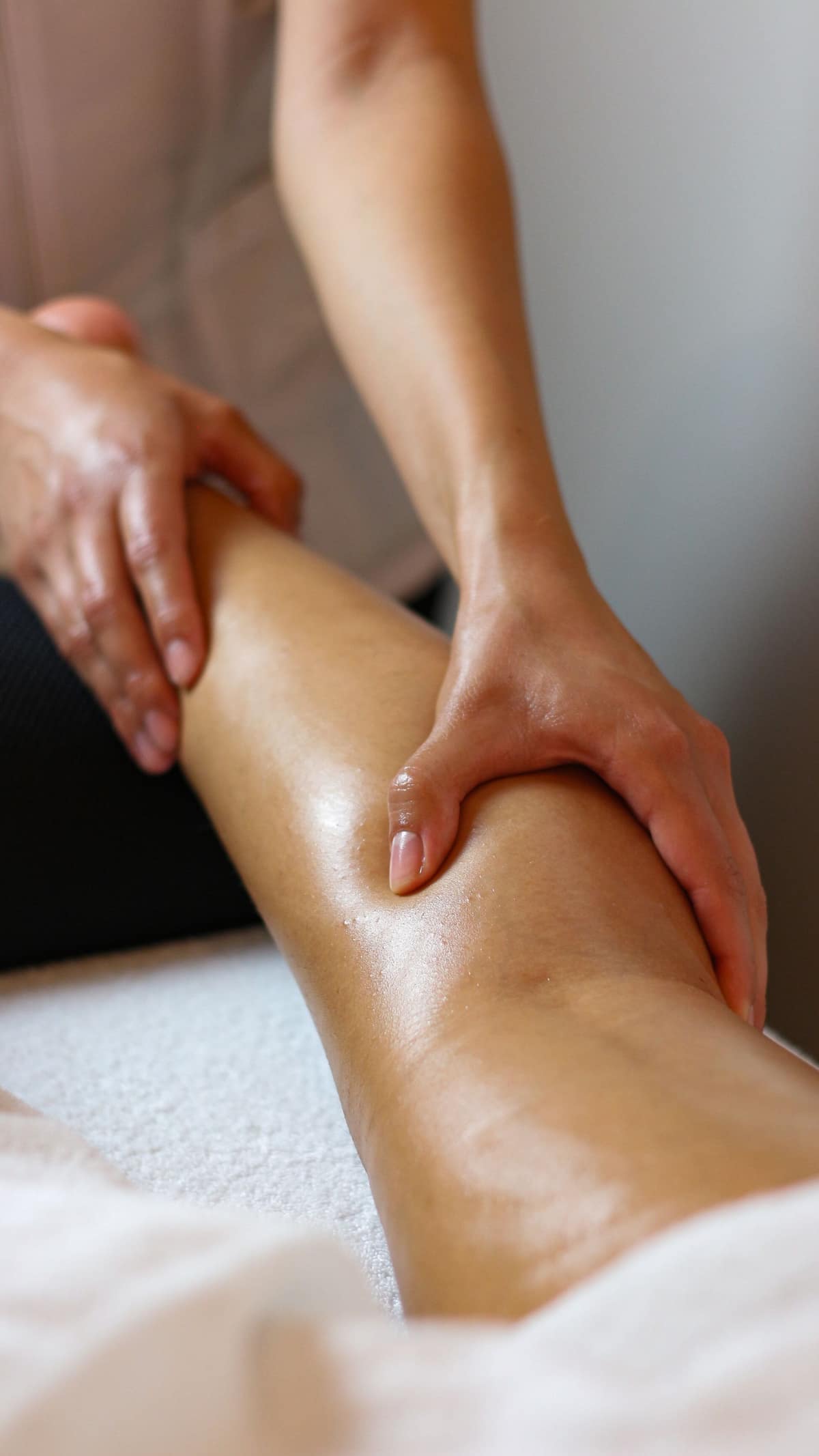
- Heat, cold or massage. All three are common ways to ease it.
- Drink water and sleep well.
Two gentle moves for a sore day
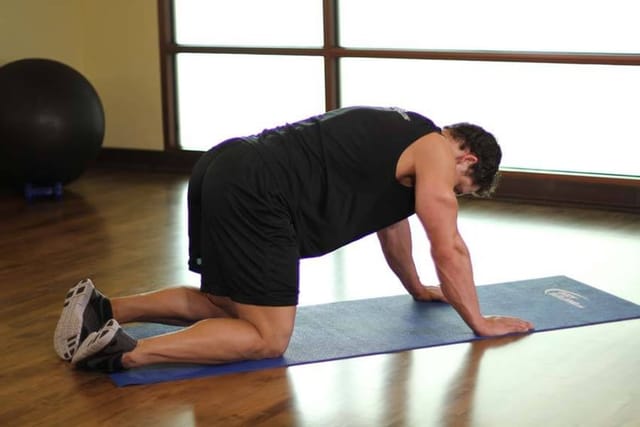
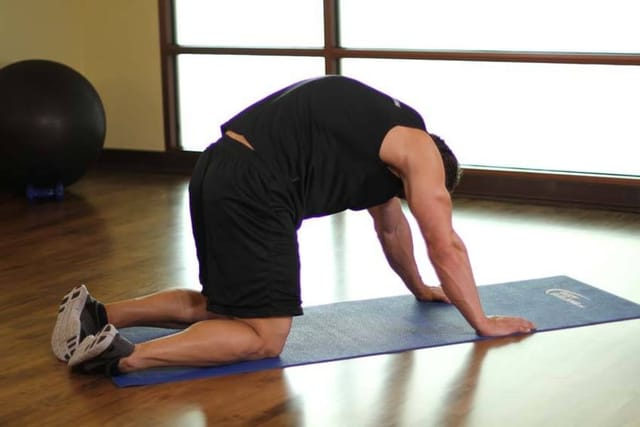
Cat Stretch
- Start on all fours, hands under shoulders and knees under hips.
- Round your back toward the ceiling and let your head drop.
- Return to a flat back. Move slowly with your breath.
Form cue: Breathe out as you round.
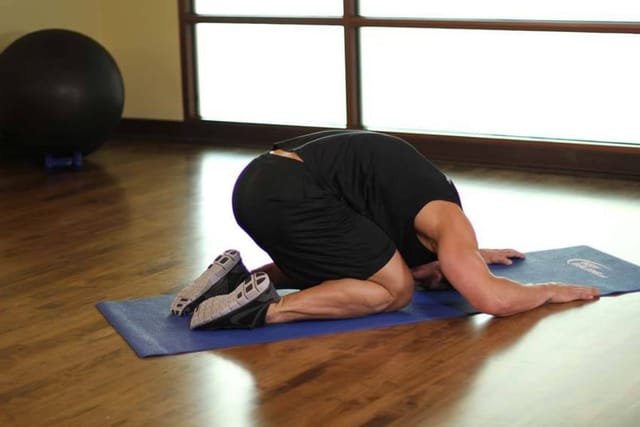
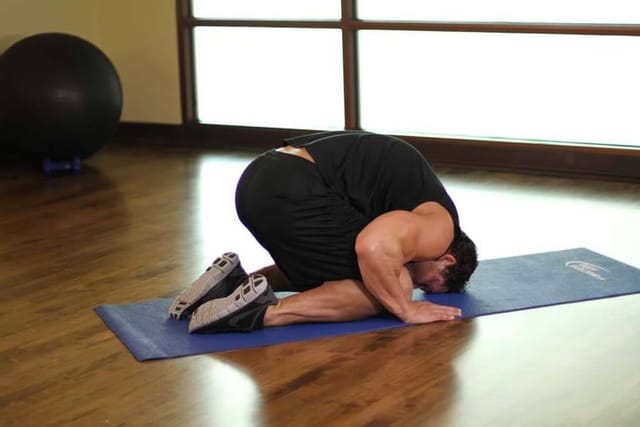
Child’s Pose
- From all fours, sit your hips back toward your heels.
- Reach your arms forward and rest your forehead toward the floor.
- Breathe slowly and let your back relax.
Form cue: Widen your knees if your hips feel tight.
How to have less of it next time
- Start slow. Begin with easier versions and fewer rounds than you think you need.
- Warm up before and cool down after.
- Build gradually. The same session usually causes far less soreness the second and third time.
Soreness is not the goal
Being sore does not prove a workout worked, and not being sore does not mean it failed. Judge progress by what you can do: more clean reps, a longer plank, an exercise that used to be hard.
When to call a doctor
The Cleveland Clinic advises contacting a healthcare provider if:
- the pain lasts more than a week;
- the pain is sharp and constant, rather than a dull ache;
- there is severe swelling around a muscle;
- your urine is unusually dark or has blood in it.
Sharp pain during an exercise, or pain in a joint, is different from muscle soreness. Stop the exercise.
Sources
The CaliStart bundle is 84 days of sessions like this, from beginner to advanced, one page a day, with photos of every move. Seven PDFs, pay once.
General fitness information for healthy adults, not medical advice. Talk to your doctor before starting an exercise program, and stop if you feel pain, dizziness or chest discomfort. Results vary. The people in the photos are models.