Push-Up Variations: A Ladder From Incline to Plyo
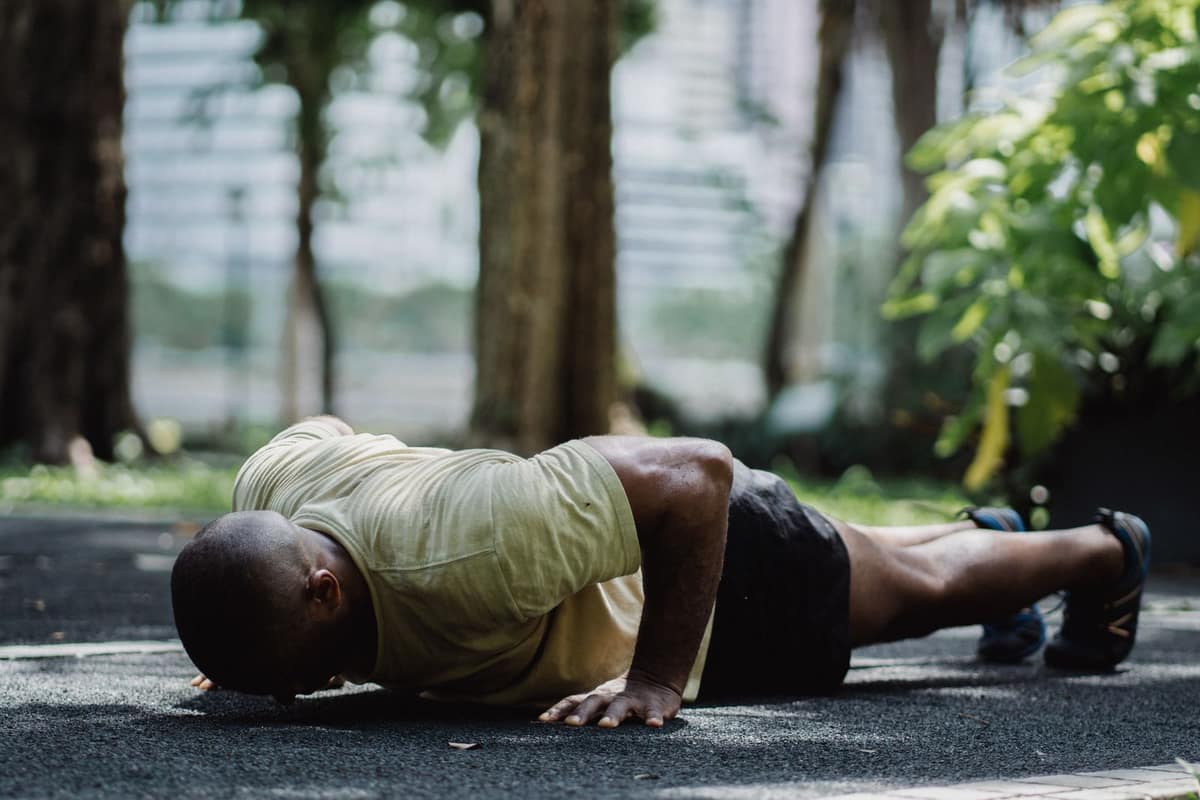
The push-up is one exercise with many difficulty settings. Change where your hands and feet go, or how fast you leave the floor, and the same movement can challenge a beginner or someone who has trained for years.
The ladder
| Step | Variation | Level | Move up when you can do |
|---|---|---|---|
| 1 | Incline Push-Up | Beginner | 2 sets of 10 on a low step |
| 2 | Push-Up on the floor | Beginner | 10 clean reps |
| 3 | Wide Push-Up | Intermediate | 10 clean reps |
| 4 | Close-Grip Push-Up | Intermediate | 8 clean reps |
| 5 | Feet-Elevated Push-Up | Intermediate | 8 clean reps |
| 6 | Clock Push-Up | Advanced | 8 push-ups around the clock |
| 7 | Plyo Push-Up | Advanced | — |
“Clean” means every rep looks like the first one: body straight, chest close to the floor, no sagging hips. The numbers are the ones the CaliStart levels use as a guide; they are not a rule your body has to obey.
Steps 1 and 2 are covered in How to Do Your First Push-Up. This article picks up at step 3.
3. Wide Push-Up


Wide Push-Up
- Start in a push-up position with your hands about one and a half shoulder-widths apart.
- Keep your body in one straight line from head to heels.
- Lower your chest toward the floor, letting your elbows travel out to the sides.
- Press back up until your arms are straight.
Form cue: Stop the descent when your chest is a fist’s height from the floor. Don’t let your shoulders roll forward.
Easier: Do it with your hands on a chair or low step.
4. Close-Grip Push-Up
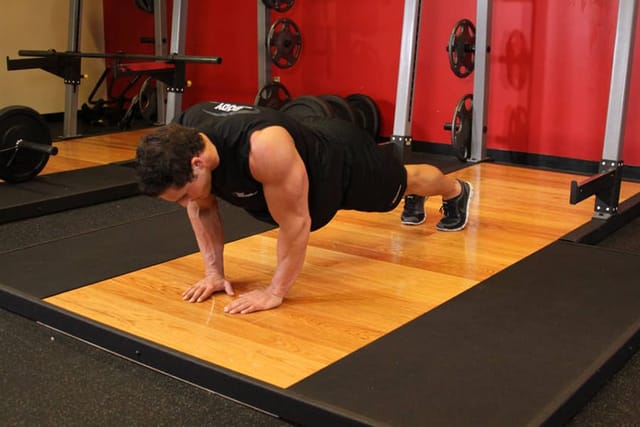
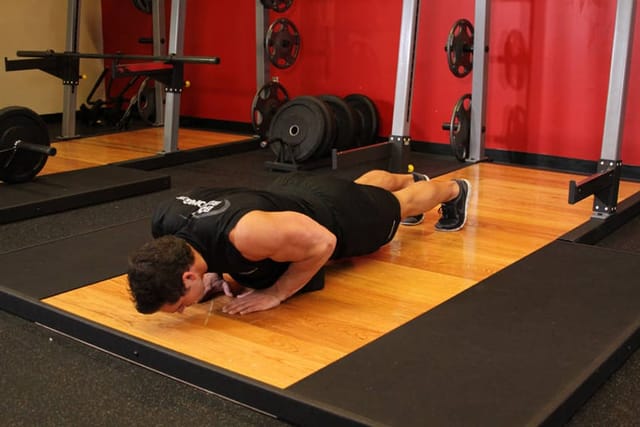
Close-Grip Push-Up
- Start in a high plank with your hands directly under your shoulders or slightly closer.
- Keep your elbows tucked close to your ribs as you lower your chest.
- Stop just above the floor.
- Press back up without letting your elbows flare out.
Form cue: Elbows brush your sides all the way down.
Easier: Hands on a sturdy chair, or knees on the floor.
5. Feet-Elevated Push-Up
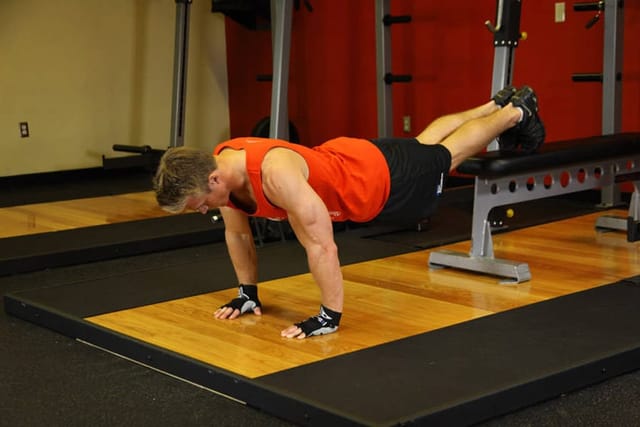
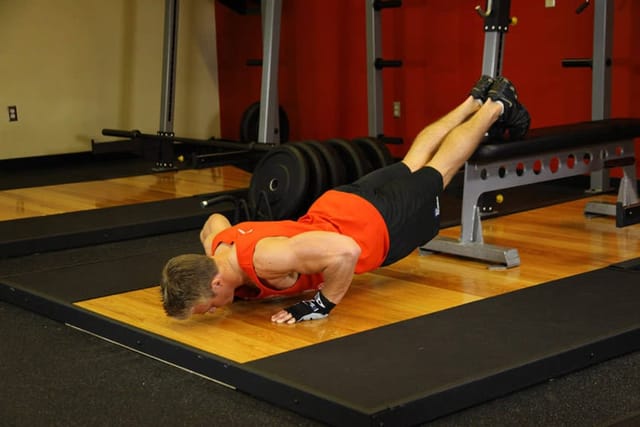
Feet-Elevated Push-Up
- Place your feet on a sturdy low step or chair and your hands on the floor under your shoulders.
- Brace your abs so your body is one straight line.
- Lower your chest toward the floor with control.
- Press back up until your arms are straight.
Form cue: Don’t let your hips sag — the higher the feet, the harder the core works.
Easier: Do the regular Push-Up on the floor.
6. Clock Push-Up
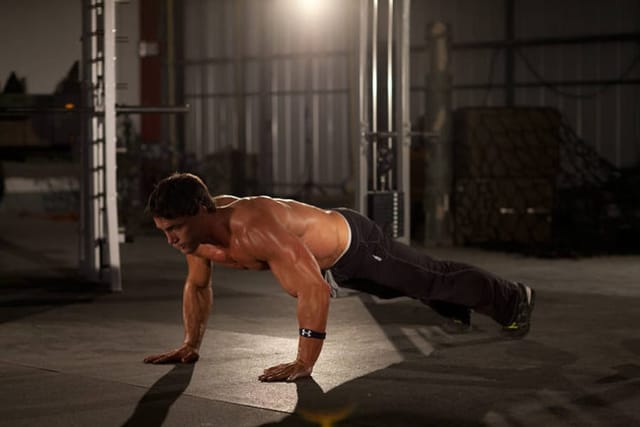

Clock Push-Up
- Start in a push-up position and imagine a clock face under your chest.
- Do one push-up.
- Walk your hands one step to the right, keeping your feet as the center of the clock.
- Do another push-up. Keep moving around the clock, then come back the other way.
Form cue: Your body stays one straight line while your hands travel. Hips don’t swing.
Easier: Take three steps to the right, then three back, instead of a full circle.
7. Plyo Push-Up
The only explosive variation on the list. Keep the sets very short: four reps is a full set.
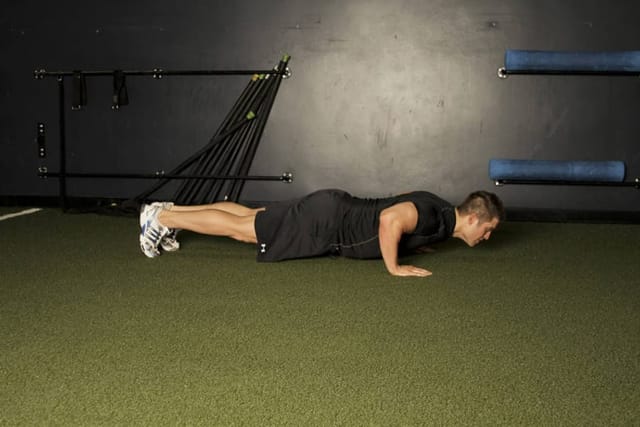
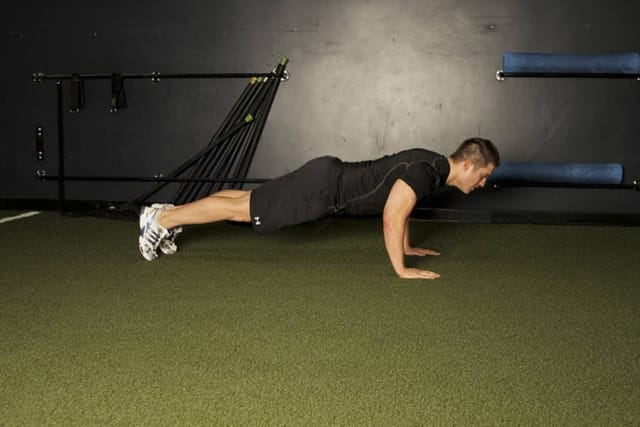
Plyo Push-Up
- Start in a push-up position on a surface that cannot slide.
- Lower your chest toward the floor with control.
- Push up hard enough that your hands leave the floor by an inch or two.
- Land with soft, bent elbows and go straight into the next rep.
Form cue: Elbows never land locked. If you cannot land softly, the set is over.
Easier: Push up fast without letting your hands leave the floor.
Three ways to make any step harder without moving up
- Slow the way down. Take 3 seconds to lower. This is the safest way to add difficulty.
- Pause at the bottom. One second with your chest just above the floor.
- Add a rep or a round. One change at a time.
When to step back down
Hips sagging, elbows flaring straight out, or half reps mean the variation is too hard for today. Drop one step and finish the set there. Wrist or shoulder pain is a reason to stop, not to push through.
The CaliStart bundle is 84 days of sessions like this, from beginner to advanced, one page a day, with photos of every move. Seven PDFs, pay once.
General fitness information for healthy adults, not medical advice. Talk to your doctor before starting an exercise program, and stop if you feel pain, dizziness or chest discomfort. Results vary. The people in the photos are models.